Triumph TR5 vs TR6
The TR5 kept the TR4A's body and gave it a new engine; the TR6 kept the TR5's engine, frame and body centre and gave them a new front and rear. What changed at each step, the two proposals that lost, and the saloon that shared the injected six.
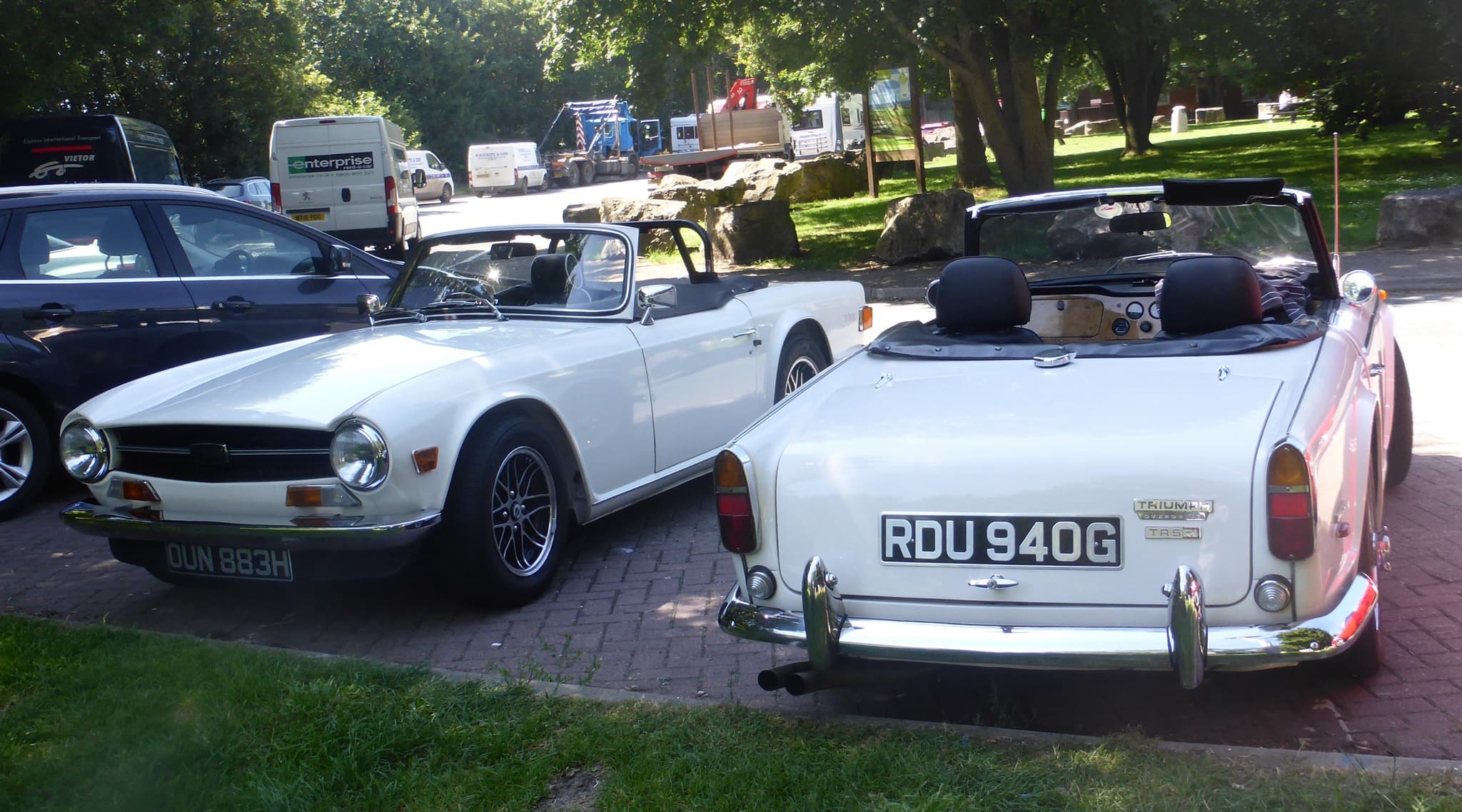
The first carburetted TR6, CC25003L, was built at Canley on the day the last TR5 PI and TR250 were, and the TR6 kept almost everything underneath. The TR5 had done the reverse a year before, putting a new engine into the TR4A's body, so that between them the two cars changed a TR in two steps, the engine first and then the body.source 1source 2source 3source 4
The predecessor: TR4A to TR5 and TR250
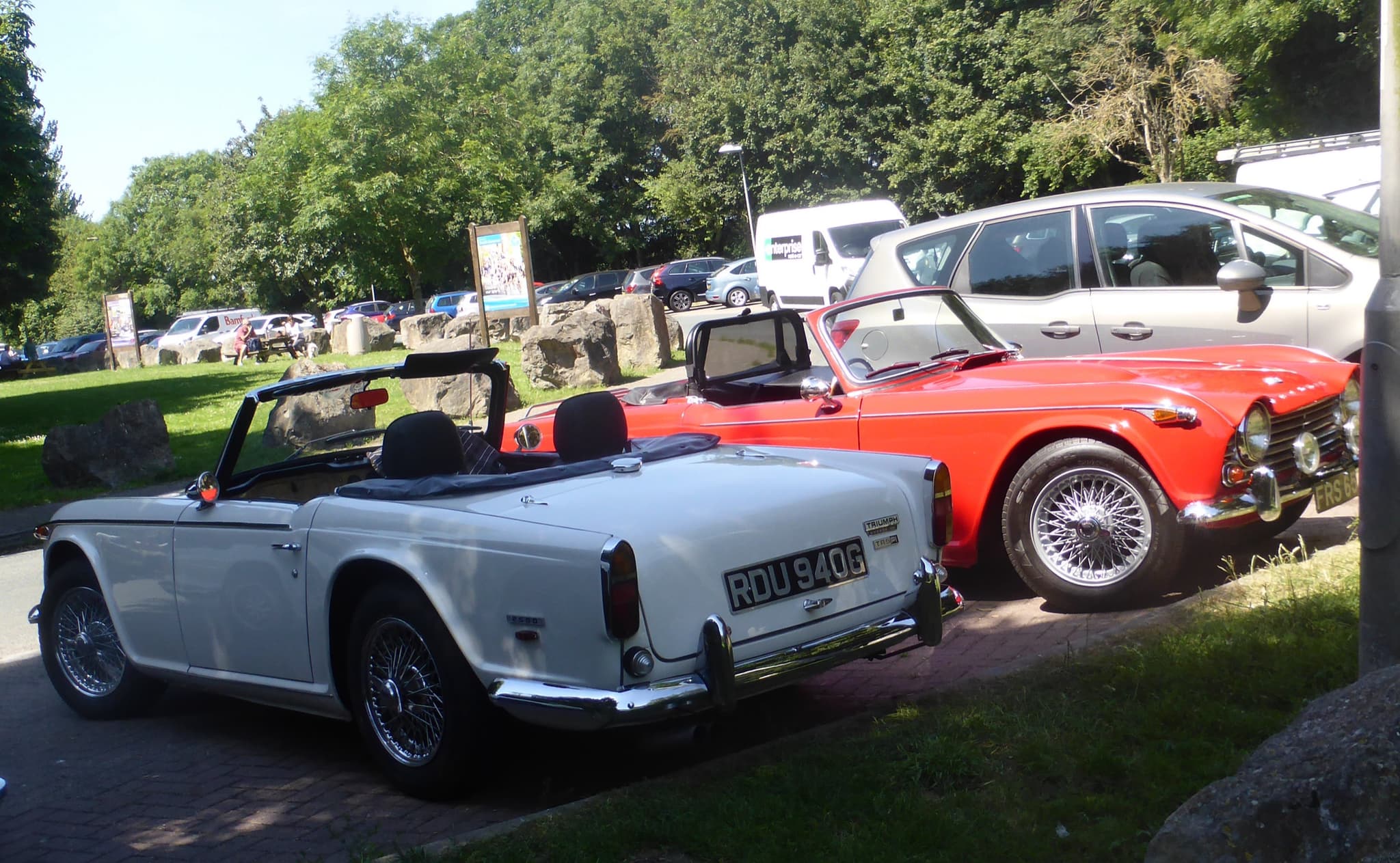
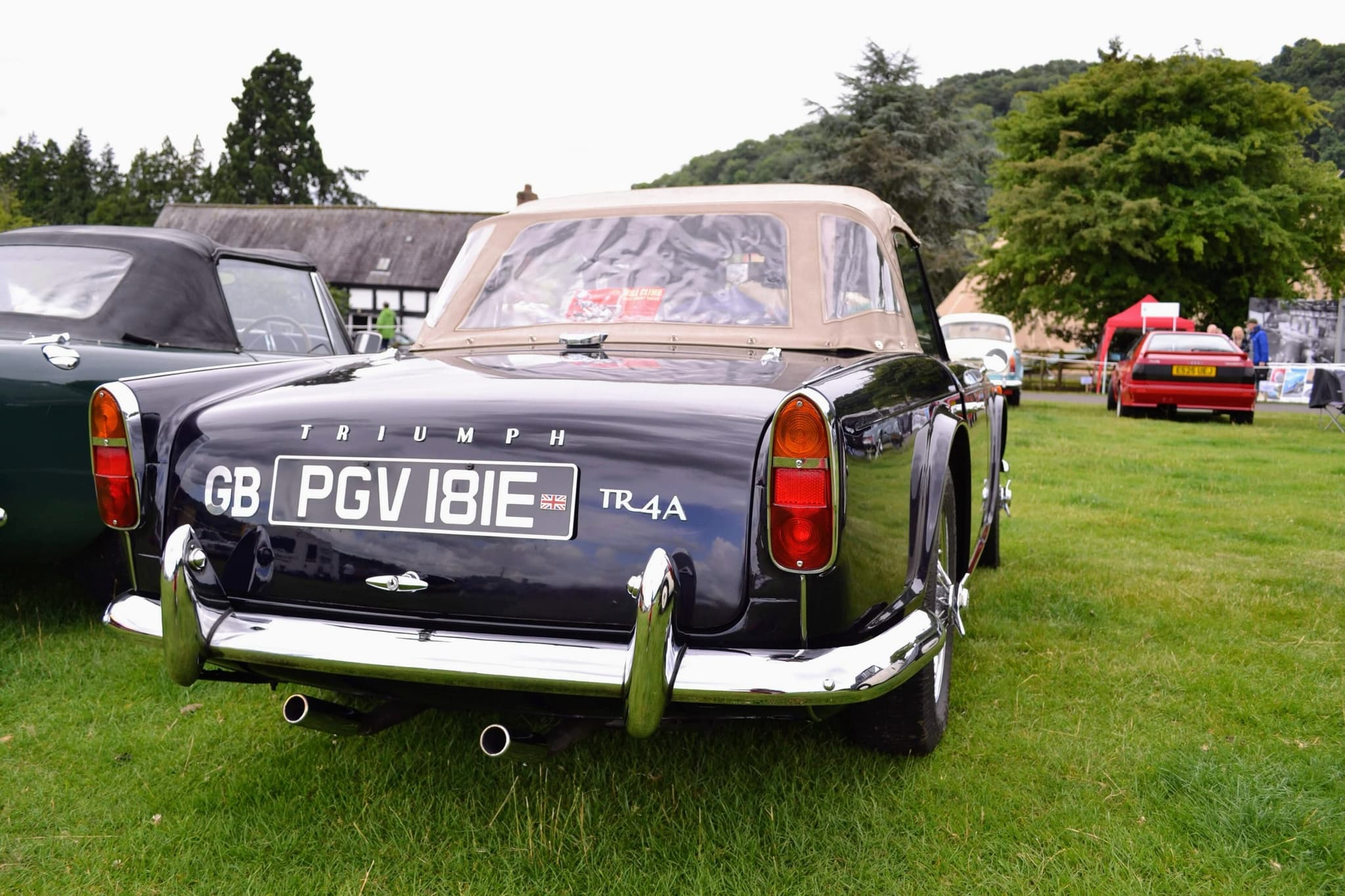
The TR5 was the TR4A with a six-cylinder engine, and the TR250 the same with carburettors. Around the engine came smaller changes, as Motor Sport, Aaron Severson and the German TR Register's guide record:
| Item | TR4A | TR5 PI and TR250 |
|---|---|---|
| Engine | A four, with wet liners | The six, injected on the TR5 and carburetted on the TR250 |
| Axle | The TR4A's | Higher geared on the TR5; the TR4A's on the TR250 |
| Front brakes | Smaller discs | Larger discs, with a servo and a tandem master cylinder as standard |
| Rear springs | The TR4A's | Stiffer |
| Charging | A dynamo | An alternator |
| Radiator | The TR4A's place | Moved forward for the longer engine |
| Grille | With a starting-handle hole | Revised, without the hole |
| Bonnet | A bulge for the carburettors | The bulge kept, though the TR5 no longer needed it |
| Sides | TR4A side flashes | Revised flashes and protruding indicator repeaters |
| Tail | The TR4A's | 2500 badges, reversing lamps below the tail lamps, both exhaust pipes on the left |
| Dashboard | Polished wood | Matt wood, with new switches for the American rules |
| Hood (soft top) | The TR4A's | A new hood, fixed to the car, with rigid channels |
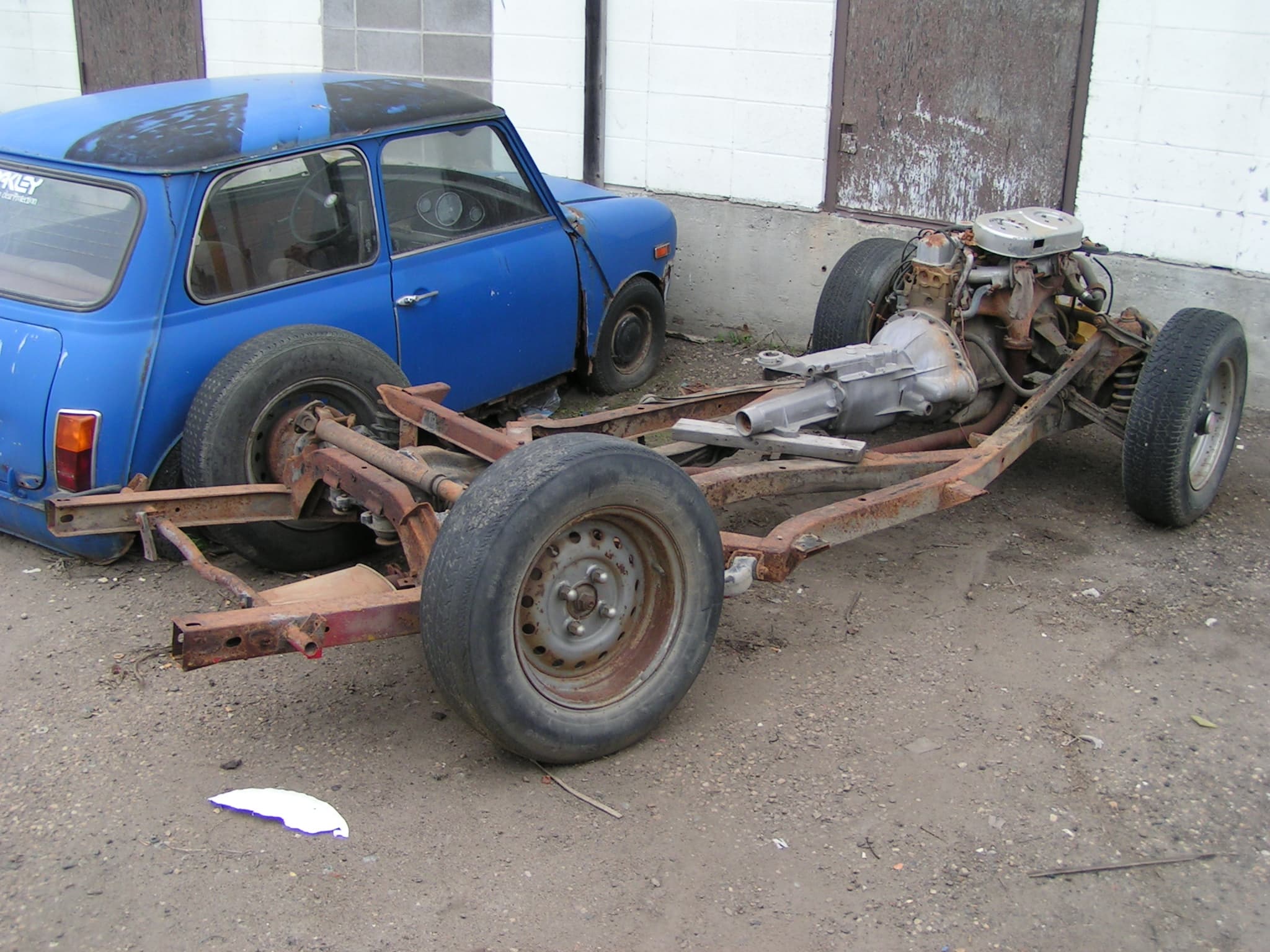
The live axle that some American TR4As had was dropped: every TR250 had independent rear suspension, as every TR5 did. Revington TR lists changes out of sight too: the bulkhead, the doors and their winders, the outer door handles, which were shared with the MGB, the front valence and the rear floor, the steering's position on the frame and the differential's mountings. The German guide calls the bodies "weitgehend identisch" (largely identical, in our translation), the differences being lamps and the inner wings (fenders) for four or six cylinders. The two-piece hardtop and its Surrey top carried over.
The TR5 came out a little heavier than the TR4A: by 13 kg (28 lb) in William Krause's history, and by 29 kg on the kerb weights in the German guide. Neither says what was weighed, and the difference in the amount stands.
The successor: TR5 and TR250 to TR6
Severson dates the decision to restyle the body, the TR4's of 1961, to mid-1967, before the TR5 reached a showroom: it needed an update "post-haste". With Michelotti busy, Karmann redrew the front and the rear, and the TR6 kept the rest, as the table shows. Severson's verdict is in a caption:
The Triumph TR6 looked like an all-new car, but was essentially a clever and elaborate facelift of the TR5 PI/TR250.
| Item | TR5 PI and TR250 | TR6 PI and TR6 |
|---|---|---|
| Styling | Michelotti's TR4 body of 1961 | New front and rear by Karmann (Gerhard Giesecke, by Severson's account) |
| Kept | – | The doors, windscreen (windshield) frame, floors, sills (rocker panels) and bulkhead; the frame, engines and running gear |
| Length | In the specifications | 155 in at first, by Severson |
| Track on disc wheels | 1,251 mm front, 1,239 mm rear, by the Italian brochure | 50.25 in front, 49.75 in rear, by Severson |
| Front anti-roll bar | None as standard | Fitted, the first on a production TR |
| Springs and dampers | – | Retuned |
| Hardtop | Two-piece, with the optional Surrey top | One-piece, by Les Mann's team at Triumph |
| Injected engine | The TR5 PI's, in cars numbered CP | The same engine and rating on the first TR6 PI, in cars numbered CP |
| Carburetted engine | The TR250's, in cars numbered CD | The same net rating at first, in cars numbered CC |
| First cars | CD1, 11 July 1967; CP2, 29 August 1967 | CC25003L, 19 September 1968; the first production TR6 PI, CP25156, 28 November 1968 |
| Announced | 3 October 1967 | January 1969 |
| Built | In the production readings on identification | About 91,850, by the TR Register's count |
The TR6's wheels were wider, 5½ in, and the VTR adds that its Laycock A-type overdrive came from the TR250's gearbox. In Britain the TR6 PI started at £1,020 before tax, £1,333 19s 2d with it, which Severson makes £35 more than the TR5's basic price of spring 1968. In America the TR6 started at $3,275 at the port of entry, by his account a bit cheaper than the TR250 had been at its launch. The performance, he writes, was little changed: Road & Track's TR6 of 1969 was "almost dead even with their previous TR250 up to 100 mph".
The proposals that lost
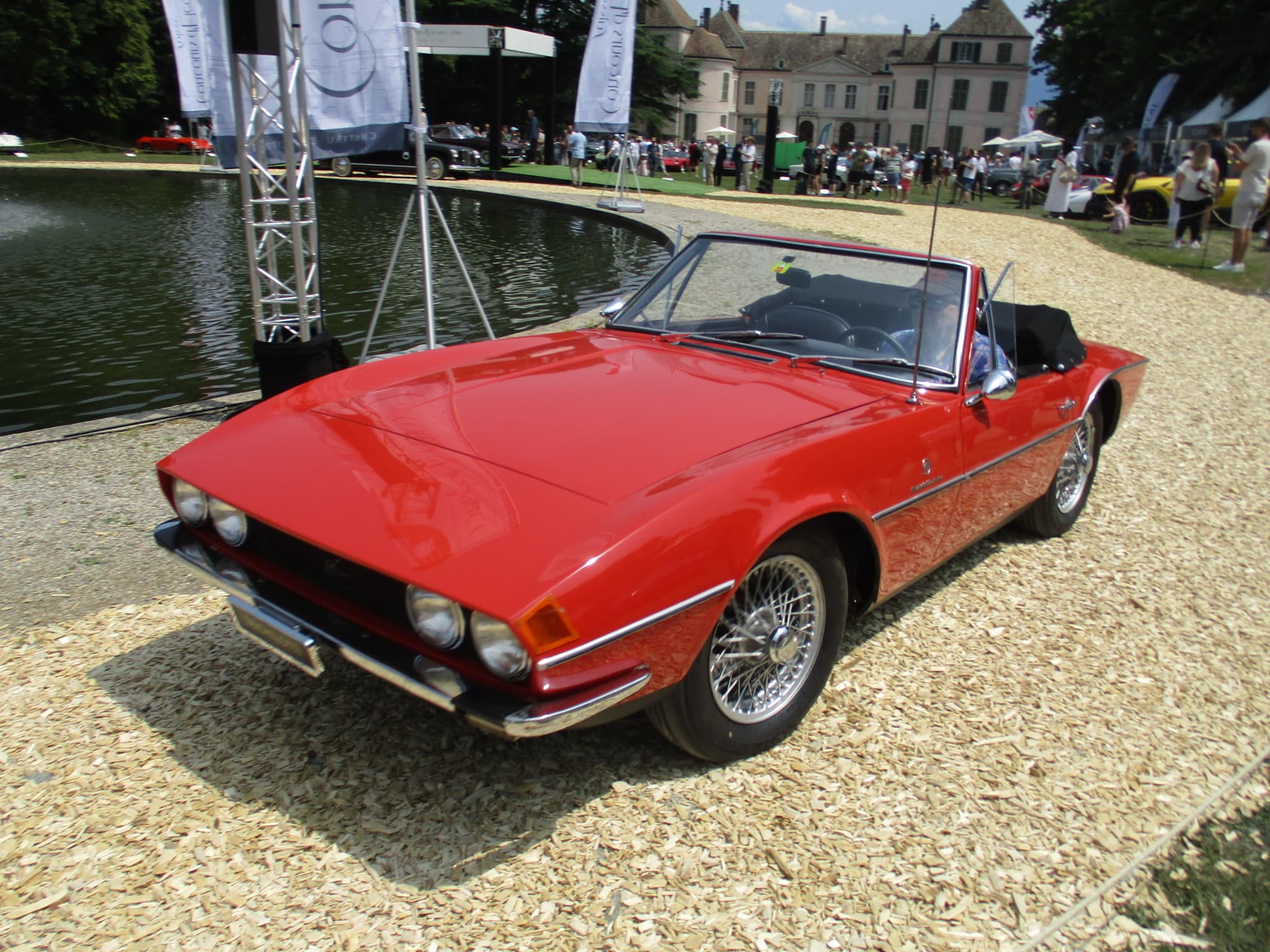
Two other ideas for the next TR appeared early in 1968, and neither was taken up. Giovanni Michelotti's TR5 Ginevra, built in 15 days on a TR5 chassis for the Geneva show in March, was in tr5passion.com's account his proposal for the next TR, the evolution of the TR5; the TR6 was Karmann's all the same.
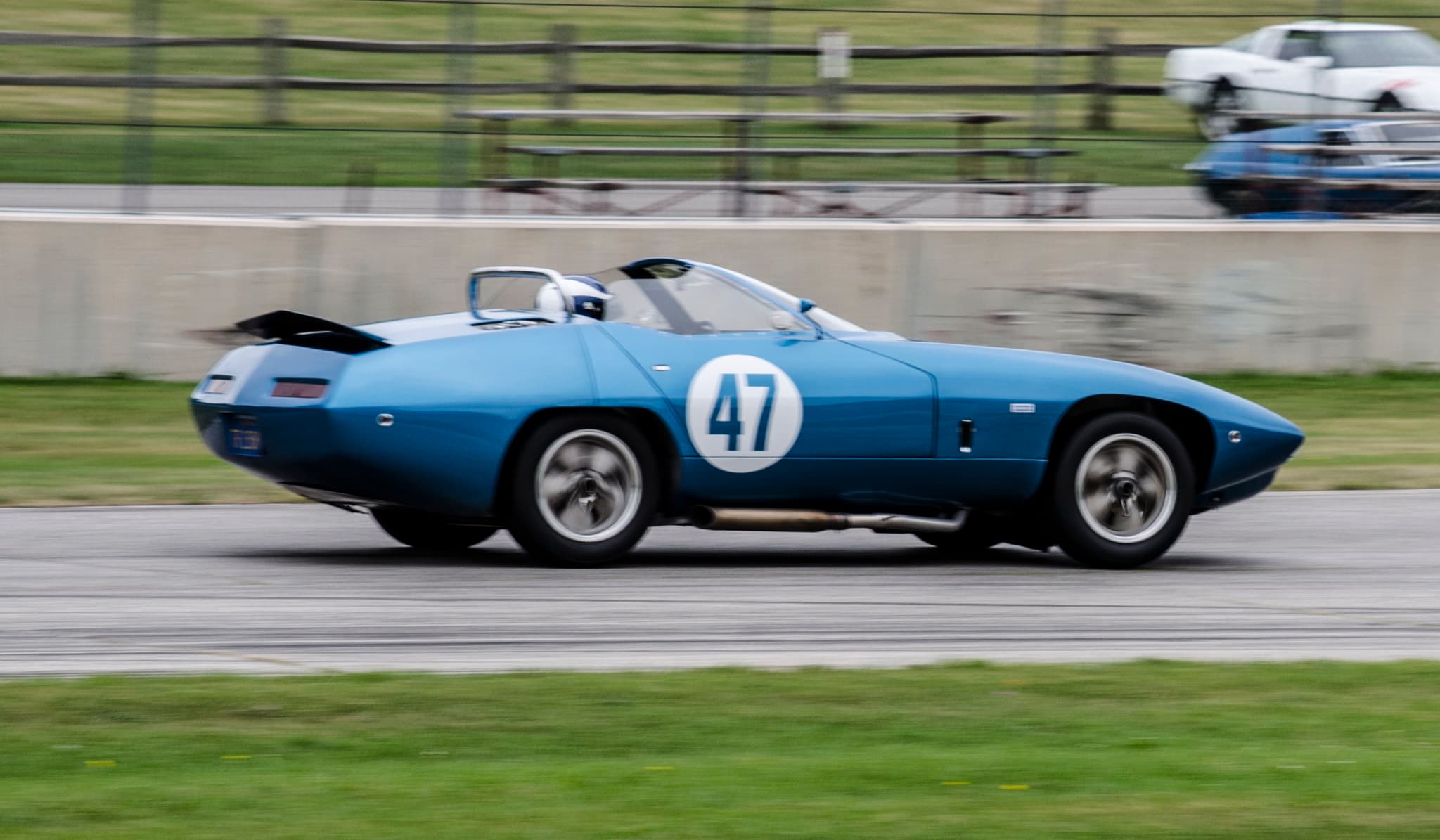
In America, Kas Kastner and Peter Brock built the TR250K for the Sebring 12 Hours of the same month, a body Brock drew on what Kastner called the TR4A chassis, with the TR250's six, and proposed it as the basis of a future TR. Kastner put it on magazine covers to win support, but, Severson writes, "Nothing came of it", and according to him Bruce McWilliams, who had authorised it, held that it could not have gone into production without being diluted.
Severson also describes an earlier idea, the Fury of 1964: a smaller, Michelotti-styled six-cylinder prototype with a body that carried its own loads, which he presents as a logical next step, though a new body structure was "not yet feasible" while Leyland's resources were committed elsewhere.source 18source 19source 1source 20source 21
The sibling: the 2.5 PI saloon
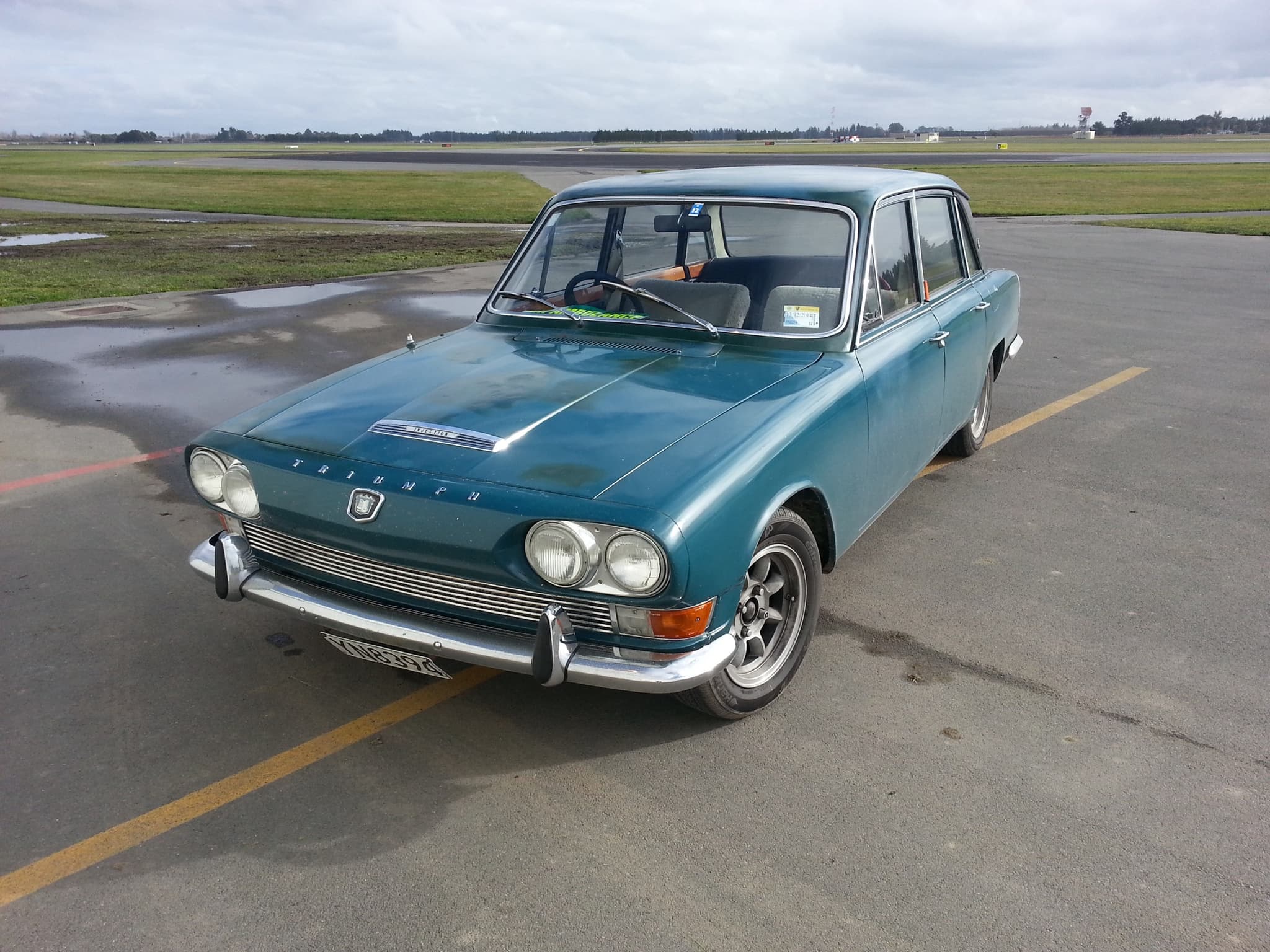
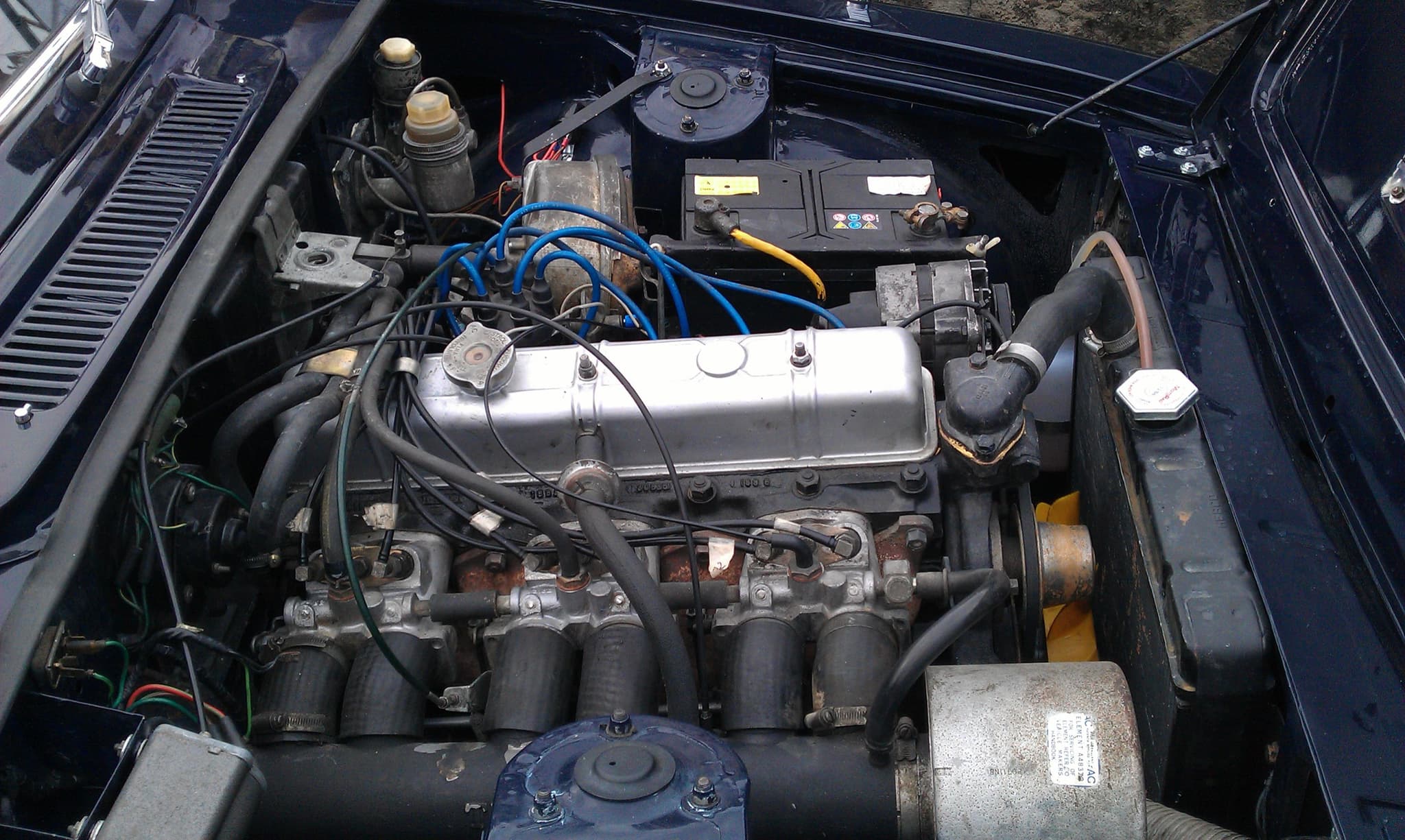
The injected six had a second home. Triumph's 2.5 PI saloon (sedan), announced late in 1968, used the same engine and the same Lucas Mk II injection, in milder tune: Bill Boddy, driving one for Motor Sport in 1969, gave it 132 bhp at 5,450 rpm, and Severson notes that its torque peaked much lower in the engine's range than the TR5's. Boddy's description of the engine leaves no doubt of its origin:
the 2.5 has a 2,498 c.c. TR5-type engine with 9.5 to 1 c.r.
By Severson's account it was the saloon, not the sports car, that sold the injected six in numbers: more than three for every TR5.source 22source 1
Sources
Sources are given as plain text; their addresses are on the sources page.
- Primarymade at the time, by the maker or by people who were there
- Referenceserious later work: clubs, specialists, magazines, books
- Aaron Severson, "Grandfather's Ax: The Many Evolutions of the Triumph TR4, Part 2: TR5, TR250, and TR6", Ate Up With Motor, 7 Nov 2012, "Wasp: six into TR4"; "A new bottle: the Triumph TR6"; "Wasp: six into TR4"; "Triumph TR5 PI and TR250"; "A new bottle: the Triumph TR6"; "A new bottle: the Triumph TR6"; "Sidebar: The Triumph TR250K"; "Triumph TR5 PI and TR250", the 2.5 PI. Reference
- Revington TR, "Technical Specification Change Points" (TR6), what the TR6 kept; Karmann; what the TR6 kept. Reference
- Drew Holliday, "Triumph TR250 Production Information" (8 pp. PDF), Vintage Triumph Register, p. 1, last cars; pp. 1–3. Reference
- Graham Robson (foreword), Triumph TR6 1969–1976 Parts & Accessories Catalogue, Rimmer Bros, edn 2.2 (source code TR600313), p. 5, CC25003L; p. 5, the first cars. Reference
- Doug Nye ("D. C. N."), "Road Test Report on a Sports Car: The Fuel-Injection Triumph TR5 PI", Motor Sport, Aug 1968, p. 26, p. 26. Primary
- Motor Sport, "A selection of new models" (Earls Court show), Nov 1967, p. 39, p. 39. Primary
- Bruno Dwinger, "Geschichte, Typenkunde und Kaufberatung: Standard-Triumph TR4, TR5/TR250 – 'die Michelotti Autos'", TR-Register Deutschland, 2009, 13 pp. (PDF), pp. 4–6, the differences. Reference
- Revington TR, "TR250/5 Technical Specification Change Points", the TR250/5 changes. Reference
- G. William Krause, The Illustrated History of Triumph Sports and Racing Cars, CarTech, 2017, the TR5's weight, as the TR4 site reads it. Reference
- TR Drivers Club, "The TR5/250", the hardtop. Reference
- TR Register, "Triumph TR6 Buyers Guide" (facts sheet), production and engine ratings. Reference
- Vintage Triumph Register, "TR6" (history, year-by-year changes, US production table, buyer's guide), the 1969 changes. Reference
- Triumph Sports Owners Association, Triumph Sports Owners Association Newsletter, January 1969, Jan 1969 (vol. 15 no. 1), the TR-6 announced. Primary
- Standard-Triumph, Nuova Triumph TR5 PI (fold-out sales brochure), Italy, Oct 1967, ref. 387/1067/IT, data panel, front suspension. Primary
- TR Register, "Triumph TR5 / TR250" (facts sheet, under "Buyers Guide"), suspension. Reference
- Clive Richardson, "The Tale of a TR6", Motor Sport, Nov 1973, p. 54, p. 54, the anti-roll bar. Primary
- Jan P. Norbye and Jim Dunne, "The $3,000 Roadsters", Popular Science, vol. 195 no. 2, Aug 1969, pp. 96–101, the TR6's price. Primary
- Frédéric Reydellet (racing history), tr5passion.com (group): "En bref / Summary", "Identification", "Lucas injection", "Options", "Technical spec", "Colours", "TR5 Ginevra", "Racing history", TR5 Passion, Summary page (_r58), the TR6; TR5 Ginevra page (_r60). Reference
- "Johnny Oversteer", "Almost Famous – Triumph TR5 Ginevra", Moss Motoring, 25 Mar 2015. Reference
- Peter Brock, "The Triumph That Could Have Been", Moss Motoring, 17 Jan 2020. Reference
- Leon Mandel, "TR-250K: Salvation of an Empire", Car and Driver, Apr 1968 (vol. 13 no. 10), pp. 2–4, the chassis. Primary
- Bill Boddy, "Road Impressions of: The Triumph 2.5 PI", Motor Sport, Apr 1969, p. 54, p. 54. Primary